
A displayed wallet balance can create a false sense of capacity. It may include assets intended for long-term holding, funds needed to complete an already planned transaction, and the native token required to pay network fees. Treating all of it as immediately available can leave a user unable to swap, bridge, revoke an approval, or simply move assets when conditions change.
Operational reserve planning separates those purposes before a commitment is made. It is not a price forecast or an investment allocation model. It is a practical discipline for self-custody users and active on-chain participants: decide what can be spent, what must remain available for execution, what supports recovery, and what should not be touched without a separate decision. A low-stakes resource-management setting such as https://www.antrush.games/ can make the trade-offs involved in preserving those options easier to observe.
Why a Single Wallet Balance Is Not a Usable-Balance Figure
The total shown in a wallet is an inventory figure, not necessarily a usable-balance figure. A wallet may hold stablecoins that are earmarked for a purchase, tokens that are locked or staked, and a small amount of the network’s native asset. The token total can look substantial while the native-token balance is too low to send anything. On account-based networks, gas is generally paid from the sender account in the native currency, so a non-native asset balance alone does not guarantee that a transaction can be submitted.
Usability is also affected by timing. A transaction can remain pending, an exchange withdrawal can be delayed, or a bridge transfer can take longer than expected. Funds that appear in an interface may be economically owned but operationally unavailable for the next action. A useful plan therefore distinguishes between funds that are visible, funds that are settled and accessible, and funds that are deliberately reserved.
There is a second risk: commitments often arrive in clusters. A user may approve a token, execute a swap, move the result to another network, and then need a further transaction to interact with an application. Estimating the cost of only the first click can produce a stranded position halfway through the workflow. Official Ethereum Transactions documentation is a helpful starting point for understanding that a sender submits a transaction with gas, the account is debited, and inclusion and later confirmation take time.
For this reason, “available to spend” should be a smaller, purpose-defined number. It should exclude assets that support security, known near-term obligations, and transactions that may require a second attempt or a corrective action. The exact buffer varies by network, application, and activity level, but the habit of separating roles is broadly useful.
Resource Management Simulations as a Safe Way to Practice Trade-Offs
Resource-management games can make this distinction intuitive without putting real assets at risk. In a colony simulation, spending every gathered resource on immediate expansion may feel efficient until exploration, defence, or a new build requirement exposes the missing reserve. The lesson is not that a wallet behaves like a game. Rather, both settings require choices under limited resources, incomplete information, and changing priorities.
A browser-based strategy experience can offer a low-stakes setting in which to observe those trade-offs. ANT RUSH presents its theme as “Build. Explore. Conquer.” Progress can encourage expansion, collection, exploration, and strategic management, while resource limits make sequencing meaningful. A player can see the cost of committing too early, preserving a margin for the unexpected, or delaying one upgrade so another action remains possible.
The useful practice is to name the resource roles before acting. One portion supports the next planned objective. Another remains untouched for disruptions or opportunities. A third may be committed only when prerequisites are met. Applied to crypto operations, this mindset can reduce rushed decisions such as moving nearly all native tokens during a period of higher fees or allocating all stablecoins before a known payment is due.
Simulations also highlight opportunity cost. Resources assigned to one project cannot support another until they are replenished. On-chain, that can mean a bridge deposit cannot simultaneously serve as a fee buffer; a token supplied to a protocol is not as immediately accessible as an idle wallet balance; and a long-term holding should not silently become the source of routine transaction costs. These are planning observations, not instructions to use a particular protocol or asset.
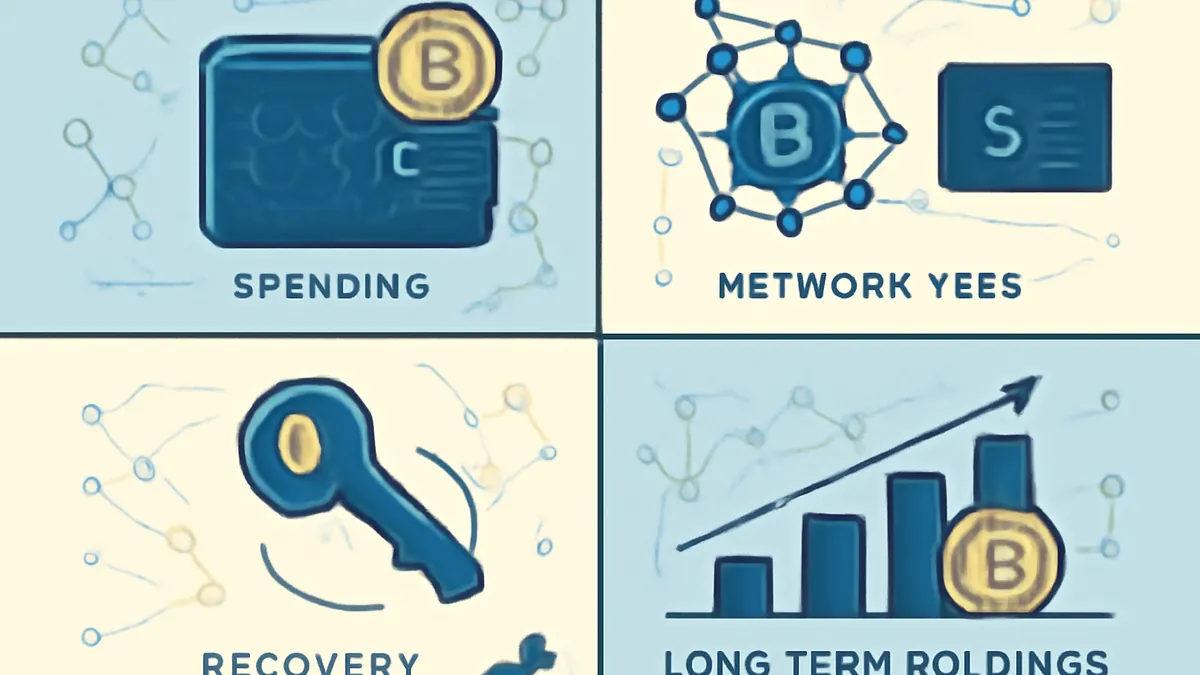
Build Four Practical Crypto Reserves Before Moving Funds
A simple four-reserve model gives each balance a job. It can be maintained in one wallet, across separate wallets, or in a written tracking system. Physical separation may reduce accidental spending, but it also adds addresses, backups, and transfer steps. The best arrangement is the one a user can verify and operate reliably.
1. Spendable or activity reserve
This is the amount designated for an intended action: a purchase, trade, application interaction, or payment. Define its upper limit before opening the transaction flow. If an action needs more than that limit, pause and reassess rather than automatically pulling from unrelated funds. This boundary is especially valuable when a fast-moving interface encourages repeated approvals, swaps, or deposits.
2. Transaction-fee reserve
Keep a separate native-token buffer for the full workflow, not merely the transaction in front of you. It should account for normal fee variability and for actions that may follow: cancelling or replacing a transaction, moving an asset after a swap, withdrawing from an application, or responding to an approval problem. The reserve is operational cash, not idle clutter. Its purpose is to preserve the ability to act when the rest of the wallet is committed.
3. Recovery reserve
Recovery is not simply another token balance. It consists of the materials, access paths, and documented procedure needed to restore control if a device fails, is lost, or is replaced. A secure offline backup, a clear inheritance or continuity process where appropriate, and tested knowledge of how restoration works are more important than memorising interface steps. Wallet recovery guidance, including How to secure your Secret Recovery Phrase and password, underscores the central role of a Secret Recovery Phrase in restoring a wallet on a new device.
Never treat a recovery phrase as an operational convenience to copy into chat, cloud notes, screenshots, or a website prompt. Do not share it with support personnel or applications. The recovery reserve should remain independent of a single device and should be reviewed without exposing sensitive material unnecessarily.
4. Long-term or restricted reserve
This category covers holdings that are not meant to fund routine activity. It may include a long-horizon allocation, funds retained for tax obligations, collateral that has specific consequences if moved, or assets set aside for a future goal. Labeling this reserve does not make it risk-free; it simply prevents routine operational pressure from silently redefining its purpose. A transfer out of this category should be a conscious decision, not a response to a depleted fee balance.
Sequence Transactions and Commitments Instead of Funding Everything at Once
Reserve planning is strongest when paired with sequencing. Before initiating a multi-step action, map the minimum path from start to finish. Identify the source network, destination network, assets needed for fees on each side, expected approvals, and the point at which funds may be temporarily unavailable. This short pre-flight check can reveal that the proposed transaction needs two native-token buffers rather than one.
Then fund and execute in stages. Confirm the address, network, token contract where relevant, and transaction details before committing the next portion. A small test transfer can be sensible when using an unfamiliar address or workflow, provided its extra fee cost is acceptable. The aim is not to create endless friction; it is to avoid making a large, irreversible commitment before basic assumptions have been checked.
Do not confuse an application’s displayed estimate with a guaranteed final outcome. Fees can change, price impact can differ from a quoted amount, and a transaction can fail after consuming some gas. Leave room for those outcomes. If the remaining fee reserve would make recovery difficult, wait until it is replenished rather than treating the last native tokens as expendable.
It also helps to separate operational accounts from storage accounts. A smaller activity wallet may limit the amount exposed to frequent connections and approvals, while a storage wallet is used less often and has a more deliberate access process. This design is not a guarantee of safety: every wallet, signing request, backup, and transfer still requires verification. But role separation can make it easier to see what is truly available for the next operation.
Review Reserve Rules After Network, Wallet, or Strategy Changes
A reserve policy is not permanent. Network fee conditions, wallet software, token usage, bridging habits, and personal goals can all change its assumptions. Review the plan after adding a new network, adopting a new wallet, using a new signing method, beginning to interact with a protocol, or changing the frequency of transfers. A buffer that was adequate for occasional transfers may be too small for regular multi-network activity.
Use a brief review that focuses on operations rather than market predictions. Ask whether the fee reserve covered the last complete workflow, whether recovery materials remain current and accessible to the right person, whether long-term funds were used for short-term needs, and whether labels still match reality. Record only non-sensitive information: wallet roles, network names, minimum fee-buffer rules, and the location of secure recovery instructions—not private keys or recovery phrases.
A practical rule can be stated in plain language: do not begin an on-chain process unless the wallet retains enough native currency to complete the likely next actions and enough independent recovery capability to survive a device failure. The dollar value of that buffer matters less than its ability to keep the user from becoming operationally stuck.
For a broader look at the colony-management setting that inspired the trade-off analogy, visit About us. The relevant takeaway for crypto users is simple: preserve options before expanding commitments. Games make the consequence visible; real wallet operations demand the same foresight, plus careful custody practices, independent verification, and decisions suited to an individual’s circumstances.