
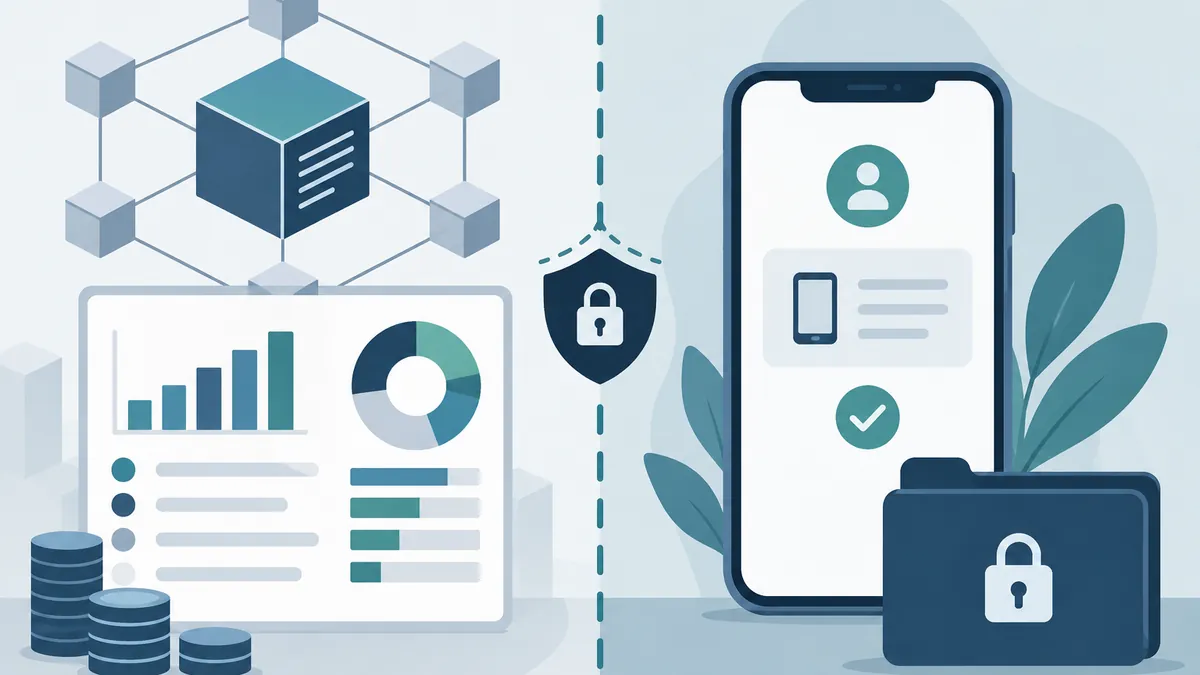
A crypto-funded community project can show that its budget was used responsibly without publishing the identities of everyone it helps. That distinction matters when the benefit is mobile credit: a phone number may be necessary to deliver a top-up, but it is not necessary in a public treasury report.
Consider a small Web3 community funding airtime for contributors who need reliable phone access. Its organisers need to establish whether mobile credit is useful, check destination support, authorise spending and confirm outcomes. Publishing recipient phone numbers, wallet-to-phone mappings or unredacted receipts adds exposure without proving that the programme worked.
The conventional fulfilment stage can be straightforward. For example, Mobile top-ups through Numio begin with selecting a country and entering a mobile number, followed by choosing an amount and paying. This example concerns the mobile-credit purchase only: it does not imply cryptocurrency acceptance, wallet integration or a connection between Numio and the project’s treasury.
The practical objective is to keep enough evidence for review while preventing public spending transparency from becoming a permanent record of recipients’ private lives.
Define the benefit and check coverage before collecting phone numbers
Start with the intended outcome, not a recipient database. Ask whether people need ordinary mobile credit, a particular data allowance or another form of support. Do not assume an airtime recharge provides the package they actually need. Confirm the relevant product and conditions before committing the budget.
Establish destination feasibility using country-level information first. The Numio mobile top-up coverage directory allows searches by country or dialling code and states that supported operators are shown before checkout. That makes it useful for an initial coverage check before requesting individual phone numbers. A listed country, however, does not establish that every number or operator in that country can receive the intended top-up.
Once the destination appears suitable, ask the intended recipient privately for the number needed to check the actual options. Numio says it automatically identifies the supported operator from the number entered; availability and top-up options depend on the destination. The project should review the displayed options rather than treating a broad coverage claim as a delivery guarantee.
Confirm the amount as well as the destination. Operator-supported denominations can affect what is available, and Numio says the final top-up amount may be rounded down to the nearest supported amount. If the programme promises a specific benefit, resolve that difference before payment. Explain privately what the recipient should expect, without collecting an identity document or wallet address merely because the team already uses those fields elsewhere.
Separate public treasury evidence from private delivery records
Evidence that money moved is not evidence that mobile credit arrived. A blockchain transaction can document a treasury transfer. It cannot, by itself, establish that the correct phone number received the intended top-up. A sound workflow therefore separates treasury authorisation, purchase evidence and fulfilment status.
Ethereum’s official Privacy on Ethereum documentation explains that standard transactions are pseudonymous but permanently recorded on a public ledger, and that activity patterns can reveal relationships or identify users. A wallet address should not be treated as a confidential identifier simply because it does not contain a person’s name.
For the mobile-credit programme, keep the public record at programme level: the approved allocation, the reporting period, relevant treasury movements and aggregate outcomes. Keep the recipient number, provider order reference and delivery-related correspondence in a restricted off-chain record. A designated reviewer can examine the connection between those records without making that connection public.
Use an internal reference that does not encode the recipient’s phone number, username or wallet. Avoid publishing a phone-number hash as a supposed privacy solution: the possible input space may be guessable, and the hash can become a persistent matching identifier. Putting personal details in transaction notes, permanent file storage or publicly accessible governance attachments defeats the separation.
Linkability also depends on context. An exact amount and timestamp, combined with a public message thanking the programme, may identify someone even when the report omits their number. Public evidence should be sufficient to explain spending, not detailed enough to reconstruct individual recipients’ activity.
Collect less data and restrict who can access it
Build the private record around specific tasks. The person arranging delivery needs a confirmed destination number and the relevant top-up choice. Someone resolving an unresolved purchase may need its order reference and status. A treasury reviewer may need the cost and supporting purchase evidence, but not routine access to every recipient’s phone number.
A minimal operational record might contain:
- An internal support reference and the confirmed destination number.
- The agreed benefit and the top-up amount selected.
- The provider order reference and current outcome.
- A short note on any unresolved issue and who is responsible for it.
These are proposed fields, not a universal legal checklist. Add information only where the team can explain why it is needed. A public social handle, full legal name, home address or wallet history should not become mandatory simply because a form makes it easy to request them.
The ICO’s A guide to the data protection principles explains data minimisation and storage limitation: personal data should be limited to what is necessary for specified purposes, and identifiable records should be kept no longer than necessary. The ICO notes that this guidance is under review. It does not set a universal retention deadline for top-up records or prescribe the fields a programme must collect.
Translate those principles into a justified retention policy. Decide what remains necessary while delivery is pending, during a dispute and after reconciliation. Set a review point for deleting recipient numbers or separating them from records that must be retained for another valid purpose. Account for copies in inboxes, exports and backups rather than deleting only the main spreadsheet.
Restrict access by role, use individual accounts with strong authentication and avoid broadly shared spreadsheet links. Tell recipients what information the project needs, who will receive it for fulfilment and how questions can be raised. These are controls the project must design; they are not claims about a top-up provider’s privacy or retention practices.
Resolve failed top-ups without exposing recipients
Before paying, have the recipient confirm the destination country, number and intended benefit through a private channel. This matters because submitted top-ups may not be reversible. A second organiser can check that the approved amount matches the purchase without copying the complete recipient record into a public approval thread.
After payment, distinguish a payment event from a delivery outcome. Numio describes order tracking through payment, processing and delivery, with next steps if a top-up cannot be completed. Do not mark a case successful simply because a payment was authorised, or mark it refunded merely because someone has requested a refund.
Keep unresolved cases in a restricted queue. Record the order reference, current status, last check and next action. Avoid immediately purchasing a replacement while the first transaction remains unresolved: that can result in duplicate support if the original order later completes. Set an internal escalation point so a pending case is not forgotten.
Use the provider’s designated support channel rather than posting screenshots in a public community chat. Include the order reference and a concise description of the problem; Numio’s help guidance asks users not to include card numbers, passwords or other sensitive payment information in support messages. Share only the recipient information needed to investigate.
If a top-up fails, the payment outcome may depend on its status and the applicable refund policy. Numio says a pending authorisation may be released or a refund issued. Until that outcome is established, report the case as unresolved rather than promising recovery. The recipient can receive a private update while the public report shows only an aggregate pending count or amount.
Publish a useful spending report without a recipient directory
A useful report should let members understand what was authorised, what was spent and what remains unresolved. It need not expose every underlying delivery record. Explain the programme’s purpose, reporting period and outcome definitions so readers know what a count of “completed top-ups” actually means.
Separate the value of credit delivered from the project’s purchase cost and any other relevant costs. Where the programme begins with a crypto treasury, do not present a treasury transfer as though it directly measured the value received by recipients. Explain differences at an aggregate level, supported by evidence available to authorised reviewers.
For example, a report could state the approved budget, total purchase cost, number of completed top-ups and amount still pending. It could also explain that a reviewer checked the restricted order records against the spending evidence. Avoid publishing exact recipient-level timestamps, receipt images or country breakdowns when a small group would make people identifiable.
Aggregation is not automatically anonymity. If a community has only one known participant in a destination, a country-specific line may identify that person. Combine categories, delay publication or omit unnecessary detail where the disclosure risk outweighs the reporting benefit. Review attachments too: a redacted document can still reveal information through filenames or overlooked fields.
The strongest design assigns different evidence to different audiences. The community receives an intelligible spending report; authorised reviewers can inspect supporting records; recipients receive private delivery updates. That preserves meaningful accountability without turning a temporary mobile-credit programme into a permanent public directory of phone numbers and wallet relationships.